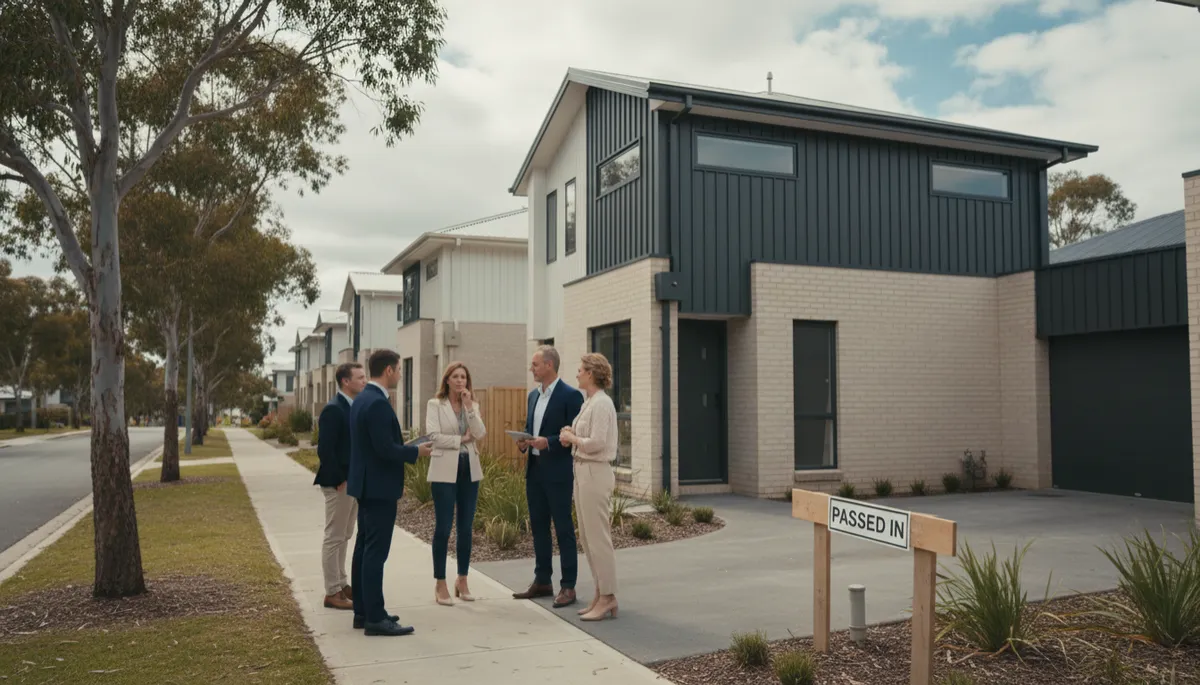
Investment Property: Unsold Auction Opportunities
When a property remains unsold after auction, an investor may see an opportunity to negotiate. But an unsuccessful auction does not tell you whether the property is a good investment or what price would make it worthwhile. Before approaching the agent, revisit the property with the same care you would apply to any other purchase. The auction outcome should prompt questions, not replace your research.

Why a Failed Auction Deserves a Calm, Structured Review
A passed in property often attracts attention — buyers wonder whether the seller is now more flexible and whether there is an opportunity to negotiate away from the pressure of auction day. In Australia’s auction-focused markets, this is a familiar scenario for investors monitoring campaigns in suburbs they know well.
Yet the absence of a winning bid can stem from many causes — price expectations, presentation, timing, broader market sentiment, or genuine concerns about the property itself. Treat the failed auction as a signal to investigate, not a shortcut to value. A disciplined investor steps back, gathers evidence, and tests whether the opportunity aligns with their strategy, rather than assuming that a discount is automatically on offer or that it would justify compromising on fundamentals.
Find Out What Prevented a Sale
Your first step is to understand why the auction result was unsuccessful. Ask the agent about buyer feedback, the seller’s expectations and whether negotiations are continuing. Then, take the time to complete your own due diligence rather than relying solely on what you hear on the phone or at an open inspection.
Ask the Agent
What feedback did buyers provide?
What price was the seller expecting?
Is the property still being negotiated?
Were there offers before or after auction?
Were any specific buyer concerns raised?
Investigate Independently
Recent comparable sales
Property condition
Layout
Maintenance requirements
Ongoing ownership costs
Tenant suitability
Property-specific limitations
An unsuccessful auction can create questions worth investigating. It does not automatically create a good investment opportunity.
As you gather information, distinguish between a fundamentally sound property that struggled due to campaign strategy or price, and one where recurring concerns — such as poor natural light, awkward floorplan, limited parking, or high ongoing costs — may affect its performance as an investment. The former may warrant a closer look at the right price. The latter may simply confirm that walking away is the more disciplined decision.
Set Your Price Using Evidence
The seller’s preferred price is only one reference point — your offer should be anchored in evidence. In the context of an investment property failed auction Australia wide, disciplined buyers lean on comparable sales, rental data, and a clear understanding of the property’s condition and likely costs. A lower asking price after auction may indicate that expectations are shifting, but it does not replace the need for your own analysis.
Comparable Sales
Similar property type
Similar land or floor area
Similar condition
Similar number of bedrooms
Parking
Comparable location
Recent sale date
Property-Specific Adjustments
Repair requirements
Renovation costs
Maintenance backlog
Layout limitations
Location differences
Additional ownership costs
A reduced asking price should not replace an evidence-based assessment of value.
If repairs or improvements are needed, obtain estimates before deciding what you are comfortable paying. Factor in trades availability, likely timeframes, and whether works would affect your ability to rent the property promptly. Avoid increasing your offer simply because the asking price has already been reduced — that reduction may only be bringing expectations closer to market value, rather than creating a margin that suits your investment goals.

Calm post-auction inspections can reveal both value and potential deal-breakers.
Consider the Experience of Owning It
A property auction Australia wide is only one moment in an investment’s life. Picture the period after settlement — the reality of leasing, maintaining, and funding the property over time. Ask who is likely to rent the home, how it will compete with other rentals, and what level of ongoing involvement or financial contribution you are prepared to make if rental income does not cover expenses at all times.
Rental Suitability
Likely tenant profile
Practical layout
Bedroom configuration
Parking
Access to transport
Access to shops and services
Comparable rental evidence
Ownership Costs
Loan repayments
Vacancy
Maintenance
Insurance
Council rates
Property management fees
Applicable owners corporation or strata costs
Unexpected repairs
The opportunity needs to work beyond the purchase negotiation. A rental appraisal supported by comparable properties can help you test whether the expected rent aligns with your assumptions. Build in realistic allowances for vacancies, maintenance, insurance, rates and management fees. For many investors, this step highlights that two properties at a similar purchase price can have very different cash flow profiles once all costs are considered.
A negotiated purchase price is only one part of the investment. The property must remain manageable during ownership.
Keep Your Original Criteria
When a property appears more accessible after a failed auction, it can be tempting to compromise. Perhaps the home is in a suburb you like, or the campaign has been on your radar for weeks. This is where your original investment criteria become especially important. Revisit the reasons you started searching and the requirements you set before this particular property came along.
What Should Still Fit
Your budget
Intended holding period
Preferred property type
Target tenant
Ownership cost limits
Rental expectations
Location criteria
When to Pause
Price exceeds your planned limit
Property condition creates too much uncertainty
Rental evidence is weak
Ownership costs are higher than expected
Important information remains unclear
The property no longer fits your original strategy
The auction result should not change the reasons you set your investment criteria in the first place.
One practical approach is to write down your non-negotiables and preferred features before re-inspecting the property. After the inspection, compare your notes against that list. If the property only looks attractive because it failed to sell, pause — a negotiated price should support a suitable purchase, rather than persuade you to accept one that does not fit your long-term plan for investment property Australia wide or within a single city.
How Passed In Properties Fit into a Broader Strategy
A passed in property can still form part of a thoughtful portfolio. For some investors, these opportunities appear in suburbs where auctions are common, and where competition may have eased slightly compared with previous years. For others, they highlight the importance of patience — waiting for a property that aligns more closely with their criteria, even if it means overlooking something that seems negotiable today.
Consider how this property compares with other options you are monitoring. Are there stronger candidates that better match your budget, rental expectations and risk tolerance? Does this property help diversify your holdings across locations or dwelling types, or does it cluster your exposure in one pocket of the market? These questions can be just as important as the immediate negotiations with the selling agent.
Discuss Your Next Step With Residy Invest
At Residy Invest , we help you assess potential purchases in the context of your property goals and financial circumstances. Rather than focusing solely on the emotion of a recent auction, we look at the numbers, the property fundamentals, and how each option fits within your broader plan.
If you are reviewing a property that did not sell at auction, start by understanding how the price, rental evidence, ownership costs and property fundamentals fit your wider strategy. This includes reviewing comparable property sales, rental property Australia trends in the local area, and the likely holding costs over time. Structured analysis can help you decide whether to proceed, negotiate, or step back and wait for a more suitable opportunity.
Book a complimentary property strategy session or call 1300 73 1864 to discuss how this property — and others you may be considering — align with your plans.
A failed auction can be a useful prompt to pause, ask better questions, and return to your strategy. With clear criteria, reliable evidence, and guidance from an experienced team such as Residy Invest , you can decide whether this particular property deserves another look — or whether your capital is better reserved for the next opportunity that truly fits.
General information only. Not financial advice.
