
Regional Housing Slowdown Widens Despite Outperforming Capitals
Regional markets held firm — down just 0.1% over the three months to July — while combined capitals slipped 2.5%. Yet the gap is narrowing, with 47 of Australia’s 50 largest regional Significant Urban Areas (SUAs) now recording softer growth than the prior quarter. The housing slowdown is no longer confined to the capital cities — it is steadily broadening across regional Australia.
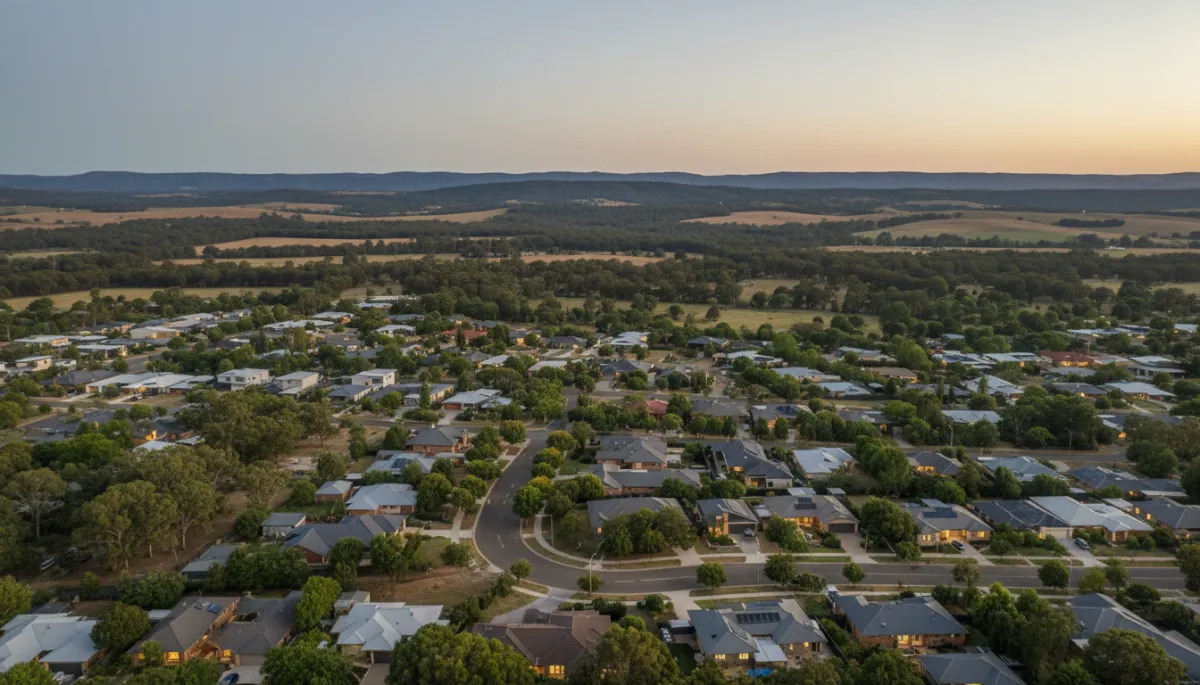
Regional markets have consistently outperformed the capital cities since housing conditions began to soften in late 2025, supported by relative affordability, tight rental markets and strong internal migration. However, the latest data shows that softer buyer demand is now being felt across a widening range of regional centres as the national housing downturn deepens.
This article provides a research-led overview of how Australia’s regional housing market is evolving and what changing conditions may mean for property investors looking beyond the capital cities.
Key Metrics at a Glance
Despite regional markets continuing to outperform the capitals, softer buyer demand is becoming more evident across the country, with fewer markets recording the strong growth seen earlier in 2026. The headline indicators below frame the current phase of the regional housing market Australia-wide.
Regional housing markets have remained relatively resilient through the broader housing slowdown, but recent figures suggest softer conditions are now spreading across more regional centres.
Regional Markets Are Still Outperforming, But Momentum Is Slowing
Since late 2025, regional housing markets have consistently outpaced the capital cities. Lower entry prices, strong internal migration and comparatively higher rental yields have underpinned demand — particularly in markets linked to resources, tourism and diversified regional economies. National data through 2026 has repeatedly shown regional prices growing faster than those in the capitals, even as the broader Australian housing market began to cool.
However, recent figures signal a clear loss of momentum. Over the three months to July, 47 of Australia’s 50 largest regional SUAs recorded softer quarterly growth compared with the previous quarter. In many cases, the shift is from strong positive gains to modest growth or slight declines, rather than a sharp correction. Even so, it marks an important turning point for the regional property market.
Softer buyer demand is no longer confined to Sydney and Melbourne. It is progressively extending into coastal lifestyle markets, higher-priced regional centres and, increasingly, some inland towns. Buyers are becoming more selective, taking longer to transact and negotiating more firmly on price as affordability constraints and higher interest rates weigh on confidence.
State-by-State: Winners and Laggards
Performance remains highly uneven across Australia’s regional housing markets. Understanding which states and centres are still recording growth — and which are now in decline — is central to effective regional property investment strategy.
Western Australia & South Australia ●
Regional Western Australia and South Australia remain the clear outperformers, each recording around +2.1% quarterly growth — the strongest nationally. In South Australia, Port Pirie (+6.7%) led gains, reflecting strong local employment and relative affordability. In Western Australia, Kalgoorlie-Boulder (+6.4%) and Geraldton (+3.8%) were standouts.
Growth in these states is increasingly concentrated in affordable regional centres with resilient economic bases — including mining, logistics, manufacturing and services. These locations continue to attract both owner-occupiers and investors seeking better value and stronger rental returns than many east-coast capitals can offer.
Queensland ●
Regional Queensland values were broadly flat over the quarter. Several popular coastal lifestyle markets recorded their first declines since early 2023, including the Gold Coast (-0.8%), Sunshine Coast (-0.5%) and Cairns (-0.6%). These areas had previously experienced strong growth, and are now adjusting as affordability tightens and buyer demand becomes more cautious.
In contrast, more affordable regional centres continued to post gains — Maryborough (+2.0%), Gladstone (+1.6%) and Townsville (+1.2%). This pattern suggests buyers are increasingly gravitating towards markets where their budgets stretch further, while still accessing employment and lifestyle benefits.
New South Wales & Victoria ●
Regional New South Wales and Victoria recorded some of the weakest conditions nationally. In NSW, popular lifestyle markets such as Coffs Harbour (-3.3%), Goulburn (-3.2%) and Nelson Bay (-3.0%) posted notable quarterly declines. In Victoria, Warragul-Drouin (-1.5%) and Geelong (-1.2%) also weakened.
Even so, not all regional markets in these states are under pressure. Several inland centres bucked the trend, including Dubbo (+3.9%), Tamworth (+2.2%) and Albury-Wodonga (+2.0%). These markets highlight the importance of local economic drivers, infrastructure investment and affordability in shaping outcomes within the broader Australian property market.
State-by-State: Winners and Laggards — Infographic
The visual below summarises the relative performance of regional markets across each state, highlighting where growth is holding up and where conditions have softened most sharply.

A dedicated full-width panel allows the State-by-State: Winners and Laggards graphic to remain clear and legible.
Selling Conditions Soften
Selling conditions across regional Australia have clearly softened. Median time on market increased in 44 of Australia’s 50 largest regional SUAs, reflecting more cautious buyer behaviour and greater scope for negotiation on price. This aligns with national data showing longer selling times and higher levels of discounting as the Australian housing market cools.
Western Australia nonetheless remains one of the strongest regional selling markets. In Kalgoorlie-Boulder, the median time on market is just 11 days, while Albany sits at 16 days and Geraldton and Bundaberg at 18 days. These short selling periods underscore the depth of demand in selected resource-linked and affordable regional centres.
In contrast, some parts of regional New South Wales are experiencing much weaker selling conditions. Bowral-Mittagong records a median time on market of 86 days, Batemans Bay around 70 days, and St Georges Basin–Sanctuary Point approximately 66 days. These longer selling periods indicate that buyers are more selective, and vendors often need to adjust pricing or expectations to secure a sale.
Rising days on market provide another clear signal that the national housing slowdown is broadening. As conditions soften, well-priced, well-located properties continue to transact — but the margin for over-ambitious pricing is narrowing.
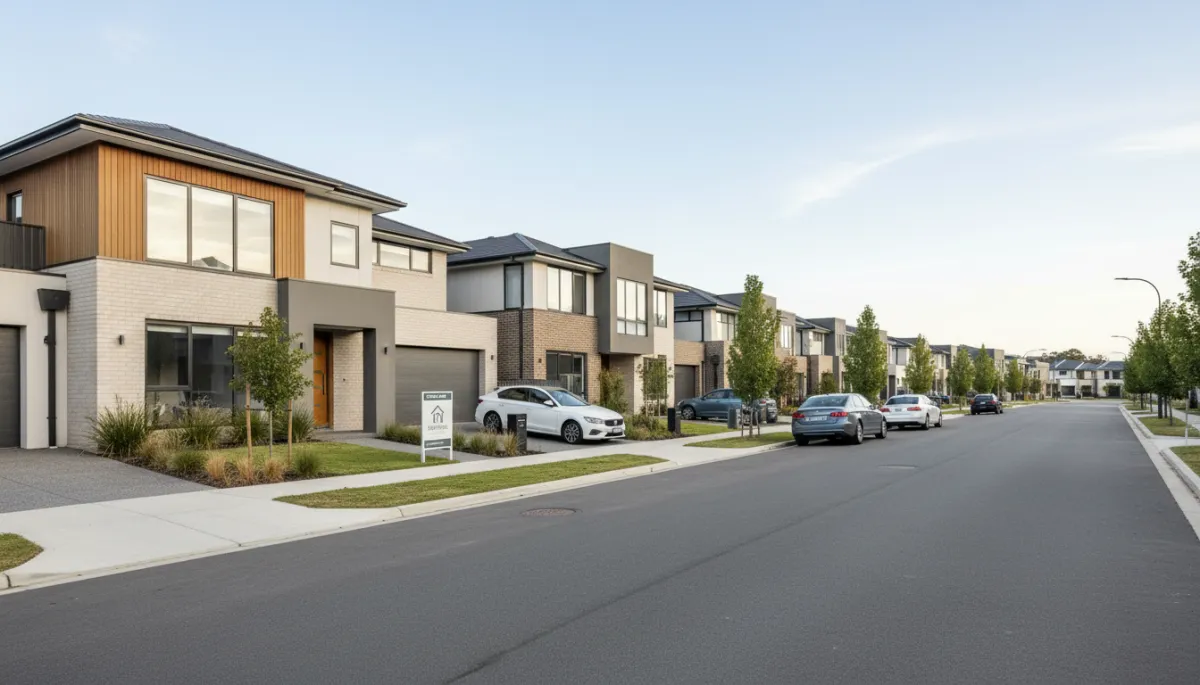
Longer selling times in many regions show buyers are taking more time to assess value.
Rental Market Moderates
After a prolonged period of strong gains, the regional rental market is also moderating. Regional rents rose 1.1% over the quarter, down from 1.8% previously, and slightly below the 1.2% increase across the combined capitals. This suggests that while rental conditions remain tight, the pace of growth is easing from earlier peaks.
Within this overall result, there is considerable variation. Albany led regional rental growth at +3.0%, followed by Toowoomba (+2.9%) and Kalgoorlie-Boulder (+2.8%). These markets combine relatively affordable purchase prices with low vacancy and resilient local economies, supporting ongoing rental demand.
At the same time, seven regional SUAs recorded rental declines over the quarter. Hervey Bay (-1.1%) led the falls, reflecting a degree of normalisation after earlier strong gains and some softening in tenant demand at the margin. For investors, this underscores the importance of assessing rental fundamentals at a local level rather than relying solely on national averages.
Vacancy Rates Remain Tight
Despite the moderation in rental growth, vacancy rates across regional Australia remain low. Regional vacancy held around 1.9%, indicating ongoing rental undersupply in many markets. In some centres, conditions are significantly tighter — Lismore and Forster-Tuncurry each recorded vacancy rates of approximately 0.8%, signalling very limited available stock for tenants.
On the yield side, Kalgoorlie-Boulder led gross rental returns at around 7.7%, well above the national regional average of 4.2%. For investors, such markets can offer a buffer against softer capital growth phases, provided underlying economic and demographic drivers remain supportive.
Selling Conditions & Rental Market — Infographic
The following visual brings together key indicators on days on market, vacancy rates, rental growth and yields across Australia’s major regional centres.

A second full-width panel gives prominence to the Selling Conditions & Rental Market graphic.
What’s Driving the Slowdown?
Australia’s housing slowdown initially became more evident in the major capital cities as affordability pressures and higher borrowing costs affected buyer demand. As these pressures have continued, softer confidence and more cautious purchasing behaviour have gradually spread into regional markets as well.
Interest Rate Pressure
Successive increases in the cash rate through 2026 have reduced borrowing capacity and raised repayment costs. Buyers in both capital city and regional markets are more price-sensitive, often lowering budgets or delaying decisions. This has translated into fewer active bidders, more conditional offers and longer negotiation periods — all consistent with the softening seen in prices and days on market.
Relative Affordability
Even amid the downturn, regional Australia remains comparatively affordable. Over the five years to 2026, regional prices have risen strongly — nearly 60% in some estimates — yet many centres still offer lower purchase prices than their capital city counterparts. This relative affordability continues to attract buyers, particularly those seeking more space or lifestyle benefits, and has helped regional markets outperform capitals during the early stages of the slowdown.
Internal Migration
Internal migration from major cities to regional areas remains a key driver of demand. Many households continue to prioritise lifestyle, remote work flexibility and relative affordability, supporting population growth in selected regional hubs. This trend has helped underpin prices and rents in markets with strong employment bases and infrastructure, even as national conditions soften.
Reduced Investor Activity
Investor participation has moderated as higher interest costs, policy changes and softer sentiment weigh on confidence. Some investors are taking a “wait-and-see” approach, particularly in markets where recent capital gains have been strong and yields are compressing. This reduction in investor demand is contributing to the broadening of the slowdown, though it also presents opportunities for long-term investors with a clear strategy and focus on fundamentals.
What Does This Mean for Property Investors?
For investors, the key message is that regional Australia should not be treated as a single property market. The latest data shows conditions can vary significantly between states, cities and individual regional centres. While some locations continue to post robust growth and tight rental conditions, others are clearly in a softer phase.
On the positive side, selected markets are still recording:
Strong dwelling value growth
Tight vacancy rates and persistent rental undersupply
Healthy rental growth and competitive rental yields
Short selling periods and resilient buyer demand
At the same time, other regional markets are experiencing:
Falling values or flat price growth
Longer selling periods and rising stock levels
Softer buyer demand as affordability constraints bite
Slower or negative rental growth in selected lifestyle markets
This divergence makes market selection increasingly important. Rather than investing based purely on broad national growth trends or headline statistics, investors should consider individual market fundamentals, including:
Population growth and demographic trends
Employment diversity and local economic resilience
Infrastructure investment and connectivity to major centres
Current and future housing supply, including new developments
Rental demand, vacancy rates and tenant profiles
Rental yields and income resilience across cycles
Affordability metrics relative to incomes and nearby markets
Local economic conditions and exposure to sector-specific risks
Long-term growth drivers, such as tourism, education or industry clusters
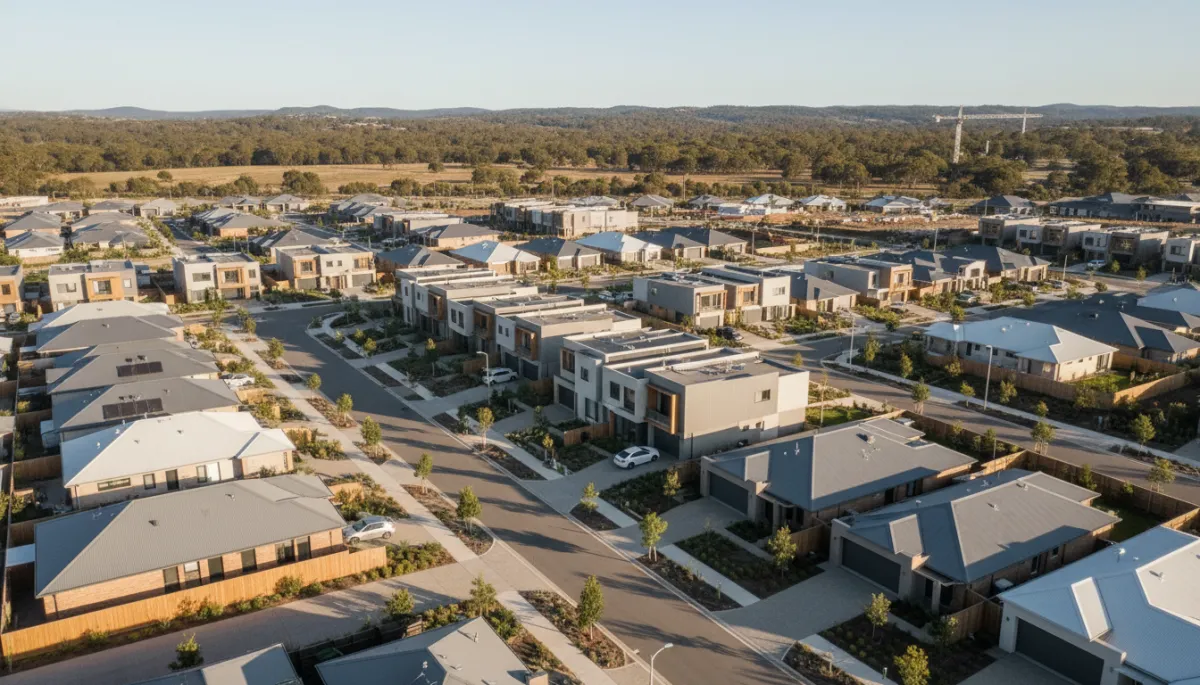
Careful market selection is critical as performance diverges between regional centres.
Regional Australia Remains Resilient But Selectivity Matters
Overall, regional markets continue to outperform Australia’s combined capitals, with a modest -0.1% quarterly decline compared with a -2.5% fall across the capitals and stronger year-on-year gains in many states. However, the slowdown is becoming increasingly broad, with 47 of the 50 largest regional SUAs now recording softer growth than in the prior quarter.
Strong performance is becoming more concentrated in select affordable markets with solid economic and rental fundamentals — such as parts of regional Western Australia, South Australia and inland New South Wales. For property investors, understanding these differences, and aligning decisions with detailed local data and clear investment objectives, will be increasingly important when deciding where and what to buy in the evolving regional property market.
Make Your Next Property Decision With Better Market Insight
Understanding where growth is holding up — and where conditions are weakening — can help you make more informed property investment decisions. A data-led approach to the regional housing market Australia-wide enables investors to balance risk, return and resilience across changing market cycles.
If you are considering your next move in the Australian property market, a tailored strategy that reflects your goals, risk profile and time horizon can add meaningful clarity.
General information only. This content does not constitute financial or investment advice.
